
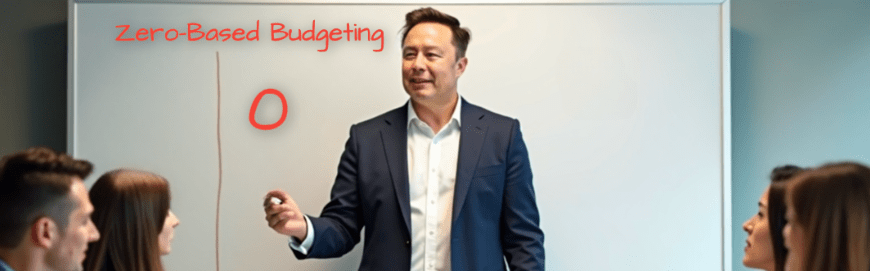
When Elon Musk took over Twitter (now X), one of his first major changes was implementing zero-based budgeting (ZBB). Instead of building on past budgets, he cut all funding to zero and required every expense to be justified from scratch. This radical approach sparked debates—some saw it as an extreme cost-cutting measure, while others viewed it as a necessary financial reset.
However, Musk’s zero-based budgeting mindset isn’t limited to the corporate world. As a key consultant to the Trump administration, his cost-cutting philosophy has also shaped government financial strategies. The Trump administration’s aggressive fiscal policies aligned with Musk’s approach, focusing on:
- Eliminating unnecessary government expenditures by requiring justification for every cost, just as Musk did at Twitter.
- Proposing deep budget cuts that challenged automatic spending rollovers, similar to corporate ZBB principles.
With zero-based budgeting frequently discussed in both business and government, I wanted to break it down: What is ZBB, how does it compare to traditional budgeting, and which one is best suited for personal finance or business operations?
What is Traditional Budgeting?
Traditional budgeting, also known as incremental budgeting, starts with the previous year’s budget and adjusts for expected changes such as inflation, revenue growth, or cost increases. This method is widely used because it provides consistency and is less time-consuming to prepare.
🔹 How It Works:
1️⃣ Take last year’s budget.
2️⃣ Adjust based on past trends and forecasts.
3️⃣ Carry over most expenses unless major changes are needed.
✅ Pros:
✔ Saves time—only requires incremental adjustments.
✔ Easier to implement, especially in well-established organizations.
✔ Provides financial stability and predictability.
❌ Cons:
✖ Can lead to wasteful spending (expenses roll over without deep scrutiny).
✖ Not as responsive to sudden financial changes.
What is Zero-Based Budgeting?
Zero-based budgeting starts from zero every budgeting cycle. Instead of assuming past expenses are necessary, every cost must be justified from scratch based on its necessity and value.
🔹 How It Works:
1️⃣ Start with a blank budget (zero dollars allocated).
2️⃣ Identify essential expenses and justify why each is needed.
3️⃣ Allocate funds based on priorities, not historical spending.
✅ Pros:
✔ Eliminates unnecessary spending.
✔ Forces efficiency and strategic allocation of resources.
✔ Helps businesses and individuals reassess financial priorities regularly.
❌ Cons:
✖ Time-consuming—requires deep analysis for every expense.
✖ Can disrupt operations if not implemented carefully.
✖ Harder to manage in large organizations with many recurring costs.
How Financial Technology Transforms Budgeting
Both traditional and zero-based budgeting have been around for decades, but AI-driven financial tools are revolutionizing how these methods are implemented.
1️⃣ AI-Powered Budgeting Software for ZBB
Zero-based budgeting is time-intensive, but AI-powered tools can automate much of the process. Instead of manually reviewing every expense, platforms like Anaplan, Workday Adaptive Planning, and Oracle Cloud EPM use data analytics and machine learning to:
✔ Scan historical expense data and suggest cost reductions.
✔ Justify expenses based on real-time financial insights.
✔ Automate reporting, making ZBB less labor-intensive.
2️⃣ Traditional Budgeting Meets AI Forecasting
For businesses and individuals using traditional budgeting, AI-powered tools like Mint, YNAB, and QuickBooks enhance budgeting by:
✔ Automatically adjusting budgets based on spending trends.
✔ Forecasting future expenses using historical data.
✔ Sending real-time alerts for overspending.
3️⃣ Hybrid Approach: Using AI to Balance Both Strategies
Many businesses combine both approaches, using AI-based tools to:
✔ Maintain a baseline budget with traditional methods.
✔ Periodically reset expenses with ZBB principles for cost efficiency.
For example, an e-commerce company may use traditional budgeting for fixed costs (like warehouse rent) while applying AI-driven ZBB to optimize marketing spend based on ROI.
Which Budgeting Method Works Best?
The best budgeting strategy depends on your situation:
💼 For Businesses:
✔ Traditional budgeting is best for stable, predictable operations.
✔ Zero-based budgeting is better for companies needing a financial reset or aggressive cost-cutting.
🏠 For Personal Finance:
✔ Traditional budgeting is easier for households managing routine expenses.
✔ Zero-based budgeting is helpful for those who want to aggressively save, pay off debt, or adjust spending habits.
Final Thoughts
Elon Musk’s aggressive cost-cutting measures have brought zero-based budgeting into the spotlight, and his influence on government fiscal policy shows how widespread this approach has become. However, ZBB is not a one-size-fits-all solution. A hybrid strategy—keeping the efficiency of traditional budgeting while occasionally reassessing expenses with a zero-based mindset—can be the most effective approach.
Would love to hear your thoughts—have you ever tried zero-based budgeting?
Discover more from Smart Personal Finance
Subscribe to get the latest posts sent to your email.
 Smart Personal Finance